Showing posts with label grandfather. Show all posts

Aug 8, 2012

Letter Openers

How many people today still use a letter opener (a.k.a. paper knife), when dealing with their mail? I know that I always have, and always will. Why? Couple of quick points:
  1. Less paper cuts
  2. Less fluffy paper flaps to clog up your bill filing folder
  3. It just looks good
  4. The concept of "slicing something open" makes you feel better than dreaming about what you want to do to your co-workers or teammates
  5. You can flip it through your fingers when you are bored (like a drum stick)
"Back in my day," the late 1980s, my grandfather gave me a letter opener that he had used at Dehn Optical for over 30 years. That is the only high school graduation present that I still have and still use.  He handed it to me in the back stock room of his storeroom and said "use this for all of the letters you get, it will keep you on the straight and true." You know what? It has, and still brings him to mind every time I slit open yet another bill. And it is now over 60 years old...still true to form.

Over the years, I've used other things to open my mail, but his has the most impact on me. But, what else I can recommend:

  • A micro Leatherman
  • A Swiss Army pocketknife
  • A butter knife from your kitchen
  • The small side of a pair of scissors
  • A small butterfly knife
I carry the small butterfly knife for my daily work (opening shipping boxes, dealing with paper mail, etc). BUT, when I sit in my easy chair in the evening to deal with my mail, I always reach for the letter opener.  Just a simple way to keep your life uncluttered... and reminisce about your family.

Jul 21, 2012

Shaving Evolution

When I was a young boy, slowly becoming a man, I had several people that passed on the tradition of how they shaved. And now I have to figure out how I will pass on the tradition to my son.

I was first exposed to "how to remove the peach fuzz" by using a gel based foam, in an aerosol, and a double-bladed disposable razor (without the comfort strip). Yeah, I suffered a lot of razor burn because of that, and it still makes me cringe when Macaulay Culkin applies the aftershave in the Home Alone movie.

Then my grandfathers stepped in. One of them exposed me to the foil shaver and the other to the triple headed rotary. But they both made my sensitive skin feel raw and burned when I was done. Especially on my neck.

A few years ago, I was given the safety razor that belonged to my father. I managed to find the double sided razor blades at the local grocery store (on the peg on the bottom left of the shaving aisle). I went to Lehman's and got a badger hair brush and mug. I use them when I have some time to enjoy the sensations of shaving. Plus, because of the quality of the shave, I don't have to do it every day. I gain a day or two in between.

So where does that leave me today? I use a combination of items because shaving isn't just a task that needs completed, it should be enjoyed too. I grew a beard and mustache, but still have some shaving to do on my cheeks and neck. I use an electric trimmer to keep the beard/mustache under control and occasionally do some trimming with thinning shears. I use the safety razor and badger brush on weekends when I have some time to enjoy the shave. On weekdays or when traveling, I hate to admit, but I use a triple bladed disposable because it is quick.

I'm saving my pennies to one day get a good straight razor. The barber shop that I go to finishes the haircut by using a straight razor and hot lather on your neck. That feels awesome!!! I can only imagine what it would feel like on my face. Stay tuned for an update when I get enough saved up to go back to Lehman's and make it a reality.

Recommended Links

Jun 5, 2012

SPAM® (the meat, not the emails)

Hearing the word "SPAM" causes a lot of us to cringe a little, depending on the context of the conversation where it is mentioned. If it is heard at work, that probably means that it refers to a new slew of emails due a computer virus. If it is heard during a conversation about what we are having for dinner, that means something else entirely.

I became acquainted with SPAM® because of my grandfather. As a member of the 8th Army Air Force during WWII (the predecessor of the US Air Force) on a B-17, he endured tinned meat in the rations that he was given. When returning home, he never gave up on making family lunches and dinners from it. SPAM® became a common word spoken when around him. I keep a tin of it in the pantry (due to the extremely LONG expiration date time), and still occasionally make it because I want it. That's why I thought it might be time to pass it on to my son as a family tradition.

Imagine my surprise when grocery shopping and we saw SPAM® now offered as individual SLICES of SPAM® Classic instead of just getting a large tin. I decided to get a simple slice, fry it up and make a fried sandwich with it (topped by cheese and ketchup) to be his introduction to tinned meat (pictured at right). I've eaten it right out of the tin at work, as a sandwich when it has been fried, and cut up to be included in an omelet. There are a LOT more flavors and recipes of SPAM offered today than what I was used to, so I encourage you to try them once in a while. To answer your first question, no, he didn't like it much. But then again, he doesn't like ham in general, which is what SPAM is made of.

Which brings me to my last point of this entry. If you want to know more about SPAM and the recipes that are available, click on the links above. But how does it compare to a similar sized beef hamburger? Here you go. Some nutrients differ, but overall, it is about the same. Keep a tin in your pantry when you need to raid it... your tongue will occasionally appreciate it...

SPAM
Hamburger


Rain, Rain, Go Away...

Several conversations with co-workers and neighbors lately have led them to think I studied meteorology in college, but I didn't. I learned from my grandfather some common sense things that "predict" rain. He passed on to me what he learned because I grew up hunting, camping, and working outside a lot. The key point is that you have to look around at the big picture. Look at the sky, trees, and watch nature's animals...they will all indicate that something is "in the air" and coming your way. So, I thought I'd share some things that I've been working with my son on understanding. I would be remiss as a father if I didn't pass on to him some very basic concepts about life and what happens all around you.

In looking at the sky, here are a couple of points to look for, and some of the analogies that still apply:
Rain on the horizon...
  • Thin and wispy clouds, up where the planes fly, mean it will be dry.
  • Flat bottomed and rounded top clouds in the morning or early afternoon hint at wetness in your near future.
  • When the clouds are growing like the cauliflower in your garden, you will be steamed before they are. Meaning that something is going on inside the clouds that will impact you. Especially if they go grey.
  • Spying a rainbow in the morning may lead you to the gold, but you will be wet when you find it. Because, a rainbow in the morning means that the storm is west of us, and most storms in the U.S. move from the west to the east.
  • If the moon is engaged, so will be you. Meaning that if there is a ring around the moon, the fronts are shifting and reflecting light differently due to the moisture content of the air.
  • Red at night, sailor's delight...red in the morning, sailor's warning. Since storms tend to travel from the west to east, a red sky at night indicates that fair weather is heading our way, in the morning, it indicates that dry air has already passed over and wetness may be on the way.
Okay, so now you have looked up at the clouds that bring the rain. NOW look around at a tree. We hate when they turn brown and fall on the lawn to rake up, but from the spring through summer, they are better indicators than the local news to SHOW us the weather. There is only one phrase that my grandfather passed on that can be shared about the leaves of a maple, poplar or other deciduous tree/shrub:
Leaf showing her bloomer...
  • When they show their bloomers, expect them to be washed. Meaning, the leaves are all "dancing in the wind," to show the lighter colored bottom side, they are reacting to the barometric pressure and temperature are acting, which means different weather fronts are impacting each other. When that happens, rain is on the way. This is one of the KEY indicators if you don't happen to look up or around. Leaves are a huge sign about what is going on around you. Open your eyes.
You've looked up and maybe glanced around. But have you SEEN the animals around you? Here are some things you can observe by watching how they interact with the senses they have:
Howling...
  • If dogs eat grass, cats purr & wash their paws, they are preparing for rain.
  • When sheep and cows herd up and turn their noses into the wind, they can smell it coming.
  • If a bull leads the cows to fields, it will be dry, when the cows coax the bull, he needs teased.
  • Cows laying in a field says they want dry bellies because a shower is coming.
  • Bats flying overhead in the evening means that they can fly all night in a dry sky.
  • When a horse sniffs the air and shudders, water will come from above.
  • Wolves always howl more before a storm.
Bottom line, pay attention to what nature shows you. It indicates what is coming better than sonar, radar, storm watch, etc. You never know when you might need to be in touch with the earth, regardless of what you are doing....
Enhanced by Zemanta

May 29, 2012

Take the Rabbit Trail

Most of us travel a lot by vehicle, and we typically take the most "recommended" ways according to our GPS or Google Maps. I've been driving to a soccer tournament that is 110 miles from where I live, and yesterday I took the recommended route and accomplished it in about 2 hours. On the way back along the same roads, I stopped counting the State Police cars at 20. Today I engaged something my grandfather taught me, which was "never travel the same path twice in a row, lest someone catch and punish you."

I would be remiss to not share that he was referring to the fact that he imprinted that on my mind since I was a very young boy. I will drive to the grocery store on one path, but return by another. I noticed it yesterday because I took the same path back that to used to get there, and stopped counting the state trooper cars when I got to 20. Today I decided to get off the highway and take some rabbit trails (back-country roads) instead. I saved the $7 tolls by not taking the highway, reduced my mileage by 20 (which is one gallon of gas on my vehicle, saving me $3.55), only increased my travel time by 28 minutes, and that presented me with some discoveries about the surroundings of where I live.

What I discovered today by doing that:

  • A drive-in movie location that has been operating since the 50's that is showing the CURRENT releases. Yeah, I'm going there next weekend to watch the new Three Stooges & Avengers double header.
  • Stopping on a side road, I got to watch a mother opossum and her 2 babies walk across the road
  • I spied a man on a scaffolding of 3 ladders lashed together by rope in the back of a pickup bed, freshly painting a Mail Pouch Chew ad on the side of a barn built in 1816.
  • A diner that started in a 1950's streetcar trolley that is still open and offering breakfast all day long. It had a police car from the 50s on the roof.
  • Stopping on the road apron to watch 2 bulls butting heads. It was a TRUE bullfight. They were butting heads, locking horns and really going at it. Have YOU ever seen that happen?
  • A true "home-made" frozen custard stand. Yeah, I'm not a big Dairy-Queen fan, but you give me frozen custard, I'm ALL about that. And it was served from the same building in the shape of a cone that became popular in the 50's.
  • The main production of Heinz ketchup is less than 70 miles from where I currently live. To quote some web research and based on the fact that Heinz is headquartered where I grew up:
Heinz is headquartered in Pittsburgh, Pennsylvania, where the company has been located since 1890, and the company's "keystone" logo is based on that of Pennsylvania, the "keystone state". However, a majority of its ketchup is produced at a factory in Fremont, Ohio.
So, in summary, I suggest that you look at your atlas (instead of relying on the GPS), find a rabbit trail, and take it. You'll discover a lot more about what is going on in life around you by doing that... Life is about experiencing and discovering... not about just getting the job done...

May 18, 2012

ZAP!!! Saving Electricity

As mentioned in Save the Earth vs. Utility Bill Reduction, this is about ways to reduce electric usage. Reducing usage benefits the environment because the power plant can cut back on generating it so they don't deplete the coal, oil, or natural gas they use. Fortunately other ways are being used more with renewable sources like wind turbines, solar panels, and water wheels. Another benefit means more $$$ stays in your wallet. The key items that use electricity in a house fall into one of three categories: lighting, climate control, and appliances. What small things in each category would help reduce usage and save some $$$?

Lighting
Image(s): FreeDigitalPhotos.net
I learned a lot of common sense things from grandparents that lived through the Depression. I often heard "turn off the lights when you leave the room, don't turn one on just to walk through a room, use a nightlight in the hall at night instead of turning on the overhead, hit the switch off and open the drapes." All of them are great ways to start diminishing usage of lights. A few more suggestions:
  • Use natural sunlight as much as possible by opening the blinds or drapes in the most used areas.
  • In large rooms, use a focused lamp for any work or reading instead of using an overhead. A floor or table lamp uses one light bulb while overheads typically use several.
  • Switch from incandescent to compact fluorescent lamps or LEDs. More detailed info is available on the CFL vs Incandescent entry.
Climate Control
The Save the Earth vs. Utility Bill Reduction entry already mentions that the largest energy drain is due to heating and cooling. It also explains that changing your air filters, installing a programmable thermostat, and closing vents in unused rooms can help reduce energy use. An air conditioner makes sense for how it draws electricity, but "I have a gas furnace." Guess what? It uses electricity too. Keep in mind the furnace recommendations on the Thermostat Settings. The point is to turn the furnace down to save energy and $$$, and put on a layer of clothing.

The more you set back, the more you save

Set back 8 hours
per day
16 hours
per day
24 hours
per day
5°
5%
10%
15%
7°
7%
14%
21%
11°
11%
22%
33%
13°
13%
26%
39%
A key understanding about staying cool, is that air circulation creates the feeling of staying cool without requiring a lot of energy to do it. Ceiling and floor fans consume far less electricity than an air conditioner. Estimates show that the average ceiling fan uses 90% less electricity than the A/C unit. So does opening windows and creating a cross-draft of air through the living space. The Thermostat Settings entry recommends temperature settings for both the furnace and the air conditioner. To save even more electricity, if you are going out, turn off the fans. They don't truly change the temperature of the room, the air moving across your body makes you feel cooler. Leaving them on while you are gone is a waste of electricity. 

Appliances
Appliances account for nearly 20% of electricity bills. Many appliances (stereos, DVD/VCRs, computers, toasters, lamps) draw a trace of electricity even when not in use or are turned "off." Unplug any appliances and electronics that are not being used to more significantly reduce electricity usage. If you are going to be gone for a while, unplug the microwave, coffee maker, radios, etc. until you get back. Sure, it isn't a ton, but if you have several unused items plugged in, it adds up.
In the kitchen, consider how much you are going to cook and the "tool" that you will use. There is a large difference between cooking a small dish on/in the stove, using a crock pot or slow cooker, and even a toaster oven for small pizzas or casseroles. See the Toaster Oven vs. Crock Pot vs. Stove entry for more detail. Baking in the stove during the summer means that your kitchen will heat up causing your air conditioner to run more.
 
Computers are also in this category. Turning on and off a computer takes less energy than when it is left running for a long time. Most new computers and hardware have energy-saving settings to automatically turn off if they have not been used for a certain period. Computers should be turned off if they aren't used for more than 2 hours, including overnight. A lot of people use laptops on battery supply only, and they go into sleep/standby mode. But guess what? You will eventually have to plug them in to charge, so they really don't "reduce" electricity usage.

In summary, the majority of the things we have in our homes depend on electricity (even the natural gas furnace and hot water heater). By saving every little bit, it adds up to a lot of energy savings and keeps more in your wallet. Some other minor suggestions are:
  • Use an insulating blanket around the hot water heater
  • Install foam insulation tubes around exposed water lines
  • Keep the refrigerator coils clean. Build up of dirt/dust prevents them from working efficiently
  • Buy EnergyStar products
  • Change the air filters for the furnace and air conditioner
  • Unplug what isn't used or won't be used for a while 
It isn't easy, trust me. But if you tackle only a few things per month, it will make noticeable changes. But my main point is that it all adds up in the end, look at the big picture about saving the planet for the future for the kids, and keeping a little in the pocket for you.

May 16, 2012

Saving Water

As mentioned in the Save the Earth vs. Utility Bill Reduction, this is about ways to reduce water usage and keep some more $$$ in your wallet. When looking at a satellite image of the Earth, it would appear that we have an abundance of water, but less than 1% of it is available for human use. That is why some regions have droughts or experience water alerts. It also demands a lot of energy to transform freshwater into water that is available for use. There are demands on energy in a home to heat water which accounts for 19% of home energy use. Keep in mind that 14% of the water that you pay for is never used, it goes down the drain. So what are some of the things we can do to reduce water use and energy demands (which keeps more usable water available and reduces our water bill)?

Change your kitchen and bathroom faucet to EPA WaterSense approved low flow aerators. Most kitchen faucets are 2.0 to 2.2 gallons per minute (GPM) flow rates, meaning 2-2.2 gallons of water flow per minute. I switched mine over to the WaterSense approved ones that have a rate of 1.5 GPM. I got them from a local home supply store, and I didn't even need a single wrench to do it.

Change your shower head. There are a LOT of them available (with the  WaterSense stamp) that reduce the amount of water needed for a shower, yet still maintain the pressure that you like. Also reduce the time used to shower. Get in, get soaped, rinse, get out. Yeah, sometimes we linger because it just "feels" good, but paying attention to the GPM and the duration helps save water and energy demands, plus keeps some money in your pocket.

Image(s): FreeDigitalPhotos.net
Change your toilet or at least update the fill valve in the tank. "Back in the day," my grandfather taught me to fill a half gallon milk jug with sand and water and place it in the tank to reduce the amount of water to fill it. Newer toilets were made to use less water, but even technology is progressing. For only a few dollars and about 30 minutes, consider updating to a dual flush one. Dual flush means that you turn the handle one way for liquid and the other way for solids. The valve uses half the water for liquids. This replaces the old phrase "if it's yellow, let it mellow...if it's brown, flush it down." Even if you have a very old toilet, there are conversion kits that will convert it. Most local Home Depot, Lowe's, and local hardware stores carry them.

Using national averages in the calculator from the NEOPERL website for just faucets, shower heads, utility charges, and household members, the following table shows what the savings would be for just changing the aerators and shower head. It doesn't include how much more would be saved by converting the toilet.
Annual Estimate Current Usage Switch to Super Water Saving
Kitchen faucet flow rate: 2.20 Gal/Min 1.50 Gal/Min
Kitchen faucet water usage: 12,526.80 Gal 8,541.00 Gal
Bathroom faucet flow rate: 2.20 Gal/Min 1.00 Gal/Min
Bathroom faucet water usage: 16,911.18 Gal 7,686.90 Gal
Shower flow rate: 2.50 Gal/Min 1.50 Gal/Min
Shower water usage: 12,574.25 Gal 7,544.55 Gal
Annual water usage: 42,012.23 Gal 23,772.45 Gal
Annual water cost: $168.05 $95.09
Annual water saving:
$72.96
Annual energy usage: 4,901 kWh 2,773 kWh
Annual energy cost: $588.12 $332.76
Annual energy saving:
$255.36
Annual water & energy savings:
$328.32

I recommend that you go to that calculator or the one on the EPA website [link] to calculate YOUR potential savings. Some other ways you can increase your savings and reduce your water usage are:
  • When washing dishes by hand, don't let the water run while rinsing. Fill one sink with wash water and the other with rinse water.
  • Run the clothes washer and dishwasher only when they are full to save up to 1,000 gallons a month.
  • Wash fruits and vegetables in a pan of water instead of running water from the tap.
  • Collect the water used for rinsing fruits and vegetables, then reuse it to water houseplants.
  • Designate one glass for drinking water each day or refill a water bottle. This reduces the number of glasses to wash.
  • Soak pots and pans instead of letting the water run while you scrape them clean.
  • Turn off the water while brushing your teeth and save 25 gallons a month.
  • Listen for dripping faucets and running toilets. Fixing a leak can save 300 gallons a month or more.
  • Turn off the water while shaving and save up to 300 gallons a month. 
Watch for more entries about savings achieved in electricity and natural gas around the household.

May 13, 2012

Summer and the Flag

As May progresses rapidly towards Memorial Day and the Fourth of July celebrations, I've seen a lot of flag decorations appearing in honor of those days. I had a conversation with my teenage son about what he has learned about the US flag. "They've never talked about it in school." That floored me. I promptly scooted his chair next to my laptop, and began guiding him to understand the flag. I recommend USFlag.org (United States Title 36 Chapter 10 codes), Wikipedia,  and Flags On Cars (if you want a more basic explanation) about respecting the flag. Most people today have LOST their respect for the flag because the history of it isn't taught much.

The discussion with my son reminded me of what I learned about our flag when I was in elementary school, Boy Scouts, my grandfather, and when I had it on my right shoulder. The reason I started guiding him to learn something was because I was getting frustrated with the way a lot of people display the stars and stripes.

When I was young, we were always taught how to display a flag. Always with the union (blue field) to the upper left of the OBSERVER of the flag when horizontal, upper left when vertical. My suggestion? If you are going to hang a flag in the front window of your house, go outside and look at it from the view of people that go past it. Hang it the right way. Might be reversed if you look at it from inside your house, but it is more respectful to hang it the way MORE people see it.

So, why does the Army use a reversed patch on the right shoulder? Part of the respect is because the union is always supposed to be moving forward. This concept stems from when the US flag first appeared with the cavalry attached it to a pole and had a flag bearer to carry it into battle, even in a windstorm. A modern understanding of that is to look where and how the flags are affixed to diplomatic vehicles while driving. As it passes you, the flag on the fender of the passenger sides shows it. This is also in the code mentioned above. Seeing stickers on the passenger side of cars and semis that aren't reversed, has bugged me a lot. Is a little bit of disrespect.

Okay, on another note. I did learn something as an adult because I didn't pay attention in class when I was young. Many roller derby refs have the flag patch on their uniform, as did I for a week before it was ripped off by a random Velcro event with a skater. As I was reading the two websites listed above, I "learned" that:
No part of the flag should be used as an element of a costume or athletic uniform.
Okay, that made me feel guilty, because a lot of referees in derby have a sticker on their helmets or patches on their shirts. I'm not sure if it "applies" to refs (I can't confirm it), but because I view it as an athletic uniform, I will not be putting a patch on my shoulder again, and have peeled the sticker from my helmet.

Don't get me wrong, I'm all about supporting the US and the flag that represents it, but it is my responsibility to be respectful. My final suggestion? Check out the websites above, and nudge others to learn maybe just a little more about the flag.

May 11, 2012

The Last Straw

My other entry about using the tab on a soda can to hold your straw and keep insects out of your drink, made me think about something from my youth. Yeah, from spending time with my grandparents. I spent a lot of time with them in the kitchen, so there were always a lot of "drinks" around. And, the best way to sip them was through a straw. When was the last time you made and enjoyed a Black Cow? Since there were a lot of glasses around, my grandparents had a lot of straws. Usually they were they were the inexpensive plastic ones, but since my grandfather used to work in a bar, he actually had some made of glass. So, I decided to do some research about current "trends" in straws.

To summarize, I'll keep it less technical and more informative. According to what I've read about the history of straws, the first ones were made from paper or reeds found in the local marsh. Things evolved, and they were eventually made from glass and metal. And yes, like you get at any local fast food restaurant, plastic. Did you know that McDonald's give away nearly 52 million plastic straws per day? And they are all thrown away. Not to be remiss, how many packages of plastic straws do YOU buy every week?

Okay, to get on the hippie soapbox and make a statement. Remember that most plastic straws are made from petroleum and then you throw them away after one use. With today's cost of oil, why continue to use a disposable item that increases the draining of the oil fields? And, when they are disposed, they end up in the dump, where they will never truly degrade. Not to mention how many toxins plastic emits (while you are drinking that beverage or when you dispose of it).

Pic from Glass Dharma
I guess I'll just summarize that because of my concern about the Earth (reducing the use of oil and the toxins in the dump) and because I am a fairly retro kind of guy, I'll be ordering some glass straws from the following sites. They come with a cleaning brush and are dishwasher approved (so I'll know they are sterile). And some sites have the different sizes available for different drinks. Yeah, technology progression is a good thing...

Decide where you stand on being more organic...and happy sipping... The following links are to sites that provide you the option of having non-oil/toxic straws. They might not work for the "thread the soda can tab" thought, but they can be decorative, personalized, straight and bent, reusable, a cost savings, and most important - life enjoyable.

Where to get straws:

May 7, 2012

Soda Can Ideas

The weather was finally nice enough yesterday for all of my neighbors to venture out and sit on the patios and fire up the grills. As we were sitting around chatting, we were talking about how being outside in the summer is sometimes painful because of the yellowjackets and the open cans of soda they are attracted to.

One of my neighbors said he once took a sip of a can of soda and was stung on the inside of his mouth because a bee had gotten into the can. Another neighbor showed us a simple trick to help prevent it. Simply turn the tab on the top around, and they can't get in.  Or if they do manage to slip in, that will prevent them from getting into your mouth when you take a sip. And yeah, that trick won't stop any ants or small flies that are attracted to the sweet drink, but at least they won't sting you if you swallow them.

That brought something to mind that I learned from my grandfather. Ever notice that if you use a straw in a can of pop (yeah, that's what we call it here), that it will rise up and fall out? My grandfather showed me that turning the tab and threading the straw through it, the tension prevents it from floating up and falling out. I never thought about just turning the tab to keep the insects out.

It also brought to mind something my dentist hygienist told me. She told me that using a straw when drinking a pop or sugary drink helps keep more sugar off of your teeth because people tend to swallow faster when using a straw. Keeping sugar off your teeth is important to help prevent cavities.

So as the "bottom line," when outside, turn the tab on the can of pop you are drinking and use a straw. It helps prevent yellowjackets and sugar from hurting your inner mouth.

Apr 27, 2012

Flour for Pasta

As you can tell, I spend a lot of focus on cooking. I spent a lot of time with my grandparents, and learned a lot from them. Refer to the Food & Stuff page for more recipes.

This is a hand powered pasta making machine.
This is the hand powered pasta making machine I use.
(Photo credit: Wikipedia)
HOWEVER...the point of this entry is because times have changed from what we used when cooking, mainly in the "flour" department. Why is that important? Because I use a lot of flours and yeast when making my pizza dough and pasta. Yes, I still make them from scratch, they might become future entries. I spend more time in the kitchen instead of outside. Sure, I keep a box or two of pasta in the pantry for "quick use," but I prefer to make it from scratch. I use my grandmother's process to make pasta and dough (all by hand, lots of Italian herbs, a wood rolling pin, lots of olive oil), and an Imperia pasta machine. And yes, I still do it all by hand...no plugs involved...

But another reason this is important, is that I am a bit of a "hippie," (yes, I was born before the original Woodstock), and always strive to find healthier ways to live. So, I started looking at the flours and pastas available at the store, and decided to do some research about them, just so I could make healthier choices. It actually surprised me to do some research online (of course), and rather than redo all the typing and food tasting, here are a couple of sites that share the information.
  • This one (click HERE) is a Nutritional Comparison of Whole Grain Pastas
  • This one (click HERE) is a taste test comparison of most of the whole wheat pastas available at most stores
When learning to make pasta with my grandmother, we always used unbleached white flour and durum semolina (1 to 1 ratio). The durum semolina gave the texture and taste that we liked, but the white was less expensive. But, in trying to make healthier decisions, and with the rise of whole grain pasta, I decided to look at it all. I was surprised by the results. Sure, using the durum semolina mixed with white isn't "horrible," but there are better choices available today for pasta and flour. So, where does that leave us?

Basically at the point, where I have to choose the flours that I will use to make healthier pizza and pasta. I think I will always add durum semolina, because it reminds me of Grandma. But in doing some "research" about flour (click HERE), I'm leaning towards using organic white wheat flour with the durum semolina.

I'll let you know how that all turns out...stay tuned.

Apr 26, 2012

Birdcage Liners Have Changed

As I sat here this morning booting up my laptop and HP Tablet, it struck me that times have changed. I'm just glad I've kept up with things, because I've changed too...maybe I'm just getting old... Naw, just learning new ways to keep in touch with the world.

I guess part of it is because I'm old enough to remember one of my first jobs, which was to hand-fold and hand deliver the Pittsburgh Press to my neighbors at the front door. Then once a month, ring the bell and ask them to pay me. I made sure to carry a box of dog treats in my heavy canvas bag so I could make doggy friends all over the neighborhood (and not get bit). Now remember, that was in the 80s so we didn't have iPods or MP3 players yet, but I wore out a LOT of cassette tapes in my Sony Walkman...

Now we fast forward to the early 2000s and a few of the changes I've noticed. Daily newspapers are delivered by adults in cars and put into the mailbox or the newspaper box out by the curb. My weekly free local newspaper is actually delivered by the US Post Office person in my mailbox with the junk mail and bills. Nobody rings a doorbell to collect, they send you a bill and you can pay it online. That must really cut down on the tips and Christmas bonuses that carriers get.

We have to jump to the next chapter of the Blu-Ray to bring us to today. My observation today was that I boot up my laptop and Firefox browser so my email, blog, and Facebook tabs open. I boot up the HP Tablet because my RSS Reader tab is there. All of them are prompting me for my ID and password, so I dutifully enter them so I can get access to my "news." I use the laptop to respond to the 5 email accounts, and "occasionally" log into Facebook. I use the HP Tablet to monitor my 15 subscriptions in Google Reader for my news. I use the tablet because I can walk around with it, sit on the porcelain throne with it, sit on the patio in front of a fire, and walk the dog with it. That is how I get news.

By using the Google Reader, it allows me to subscribe to news channels from all around the world and have one place to check for all of the blog entries that are made. It is efficient and allows me to see "at a glance" what is going on everywhere on Earth. While I strongly encourage you to learn about Reader and RSS subscriptions because it is more efficient, just keep in mind that you'll lose your newspaper.

Apr 11, 2012

You Are Driving Wrong - Part II - Steering Methods

In the Part I - Hand Placement of the You Are Driving Wrong series, I discussed where your hands should be placed (9 and 3, not 10 and 2) [link]. This follow up is about 3 steering methods and when to use each type. I'm going to summarize what is on the NHTSA document about Using Efficient Steering Techniques [PDF].

Push/pull Steering - Preferred method
  • Left hand is between 7 and 8 o’clock, right hand between 4 and 5 o’clock.


  • Depending on the direction of the turn, right or left hand pushes the wheel up and the opposite hand slides up, and pulls down.


  • Pulling hand moves down, the other hand returns to the its original position.

  • Reverse the process to bring the vehicle back to the desired path.
  • Hands never cross over the steering wheel, so there is less chance of an injury to the face, hands or arms from an air bag in the event of a crash.


Hand-over-Hand Steering:
  • Use when turning at low speeds with limited visibility at an intersection, when parking, or recovering from a skid.
  • Left hand grasps the wheel between 8 and 9 o’clock and right hand between 3 and 4 o’clock.

  • Depending on the direction of the turn, use the right top third of the wheel to move it to the right and use the left top third of the wheel to move it to the left.

  • One hand grasps the wheel and pushes up, the opposite hand lets go, reaches across the other arm, grasps the wheel and pulls the wheel up, over and down.

  • As wheel is pulled up, the hand that initiated the pushing motion releases the wheel and returns to its original position.
  • Simply reverse the hand-over-hand process to bring the vehicle into your intended path. 


One Hand Steering:
  • Use one hand steering when backing or operating vehicle controls (wipers, flashers, lights, etc).
  • The placement of one hand on the steering wheel is critical to vehicle balance, steering reversals, and potential injury.
  • When reaching for an operating control,  keep the other hand in the normal position of 8-9 o’clock or 3-4 o’clock, depending on steering wheel design.
  • One hand at 12 o’clock is only recommended when backing up and the driver turns in the seat in order to see to the rear.
  • The way the wheel is turned when backing is the direction the vehicle will move to the rear. 

Apr 9, 2012

You Are Driving Wrong - Part I - Hand Placement

I'm not a golfer, but after spending so much time with my grandfather as his caddy and what he taught me about driving, I would be remiss to not share "how times change." Under his tutelage, I learned what a driver was to a golfer, but also what a driver (of a vehicle) was as a person. As I prepare to become a mentor to a driver in a few years, I decided to do some "research" about tutoring them. I discovered that I have a lot to teach, but that I'm also doing it wrong myself. I'll cover the point of my entry first, and then add my personal comments.

"Back in the day," I was taught to put my hands at 10 and 2. Meaning, one hand at 10 o'clock and the other at 2 o'clock. It worked with the steering wheel in front of me that would get me home safely every night. But guess what....times changes. Why? Mainly because steering wheels have changed. Now, I need to put my hands at 9 and 3, as explained in a National Highway Traffic Safety Association (NHTSA) document [PDF]. I suggest you download the document and share it with anyone that you are mentoring behind the wheel.

Image from the MSNBC report site
Okay, your question is "why," but that is because times changes, so have steering wheels. Most steering wheels now contain air bags that deploy when you are in an accident. If it deploys and your hands are at 10 & 2, your arms will be blocking the safety of the bag and they will be forced backwards towards your head. According to a report on MSNBC, the bags inflate at a speed of 150-250 mph. And to quote the report:
Among the injuries the NHTSA reports from improper placement of the hands when an airbag deploys are amputations of fingers or entire hands, traumatic fractures and a particularly stomach-churning injury called "degloving," which — trust us — you definitely don't want to look up.
The bag can also slam your hands directly into your head, causing broken noses and concussions.
Yeah, I'm thinking I don't want to run the risk of any of that happening to my arms and hands. Being in an accident isn't always because YOU did something wrong, it could happen because SOMEONE ELSE caused it. So, in trying to look out for myself, I'm going to start moving my hands to the 9 and 3 position instead of the "old skool" 10 and 2. Not to mention that I've already had a TBI (see related links on the Misc / Brain Dump page) and do NOT want to cause a concussion.

In preparing to mentor a future driver, I've learned some things myself... In fact, Part II of this series will be about how to turn the wheel. Yeah, that's changed too.

Mar 29, 2012

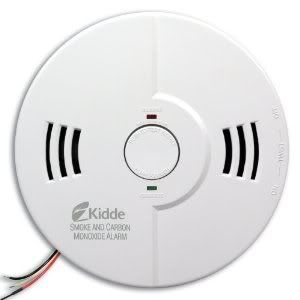
Smoke Detectors

UPDATE
Another tip I received online was to use a shower cap over the smoke detector when cooking something that will smoke (like when using cast iron). Don't simply "deactivate" the alarm, you'll forget to enable it later. Simply slip a shower cap around the smoke detector, cook your meal, enjoy it, and you'll remove the cap later.
______________________________
The first couple of houses that I lived in didn't HAVE smoke detectors. It wasn't until I moved to Pittsburgh, PA in 1974 that I had ever seen them. I remember my dad dragging out the step ladder, drill, screws, screwdriver, smoke detector, and 9 volt batteries to install 2 in the house. One was outside my bedroom door and the other was in the living room (next to the kitchen). I also remember this was when my grandpa instructed ME to change the batteries in them. I'm not sure how it became MY responsibility to change them, but I am glad he did. I still change them twice per year, on the days that we change the clocks forward or back. Because of that, I still cringe on those days when I have to lug out the ladder and do that.

But, moving into a new built house in the late 90s and now living in an apartment has also taught me some things. Smoke detector technology has changed and we need to keep in touch with that if we are going to understand how they work and what they do.

When I moved into the new built house, the contractor explained to me that the smoke detectors had advanced to the point that they not only detected smoke, but also were carbon monoxide detectors. They were "hard wired" into the electric panel now, and the battery only served a purpose if the electricity ever shut off (they would still work). But, I was diligent and changed them twice a year.

Available at Sears
And now in changing the batteries in my apartment taught me something else that has really helped me in cooking (especially in a cast iron skillet or Dutch oven). Newer smoke detectors actually have a button on them that you can press to shut them off for 7-20 minutes, should they go off for the wrong reason, like when you burn your home made home fries or hash browns. See my other blog entry about cooking oil smoking points in the kitchen for more info. And, it also vocally tells you whether it detected a fire or carbon monoxide. In the OLD days, you had to get the chair under the detector, rip the cover off, and rip the battery out. In my 90s house, you had to stand under it and fan it with a newspaper until it stopped. In my new apartment, I just have to reach up and press a button for 5 seconds (and then I have 7-20 minutes to clear the smoke out of the kitchen). WOW!!! Massively helpful things to know when I'm burning dinner.

Another new technology about the 4 smoke detectors in my apartment, is that they are all tied together by the wires in the walls. If ONE goes off, they ALL go off. So, if a fire starts down the hall in my son's room, the detector in MY room goes off. I'm more likely to hear it in my own room, than down the hall in his, with both doors closed. Yeah, that is another good development in smoke detectors.

Something else that I learned in doing some basic research, is that it is still recommended that you change your batteries twice per year, but it is also now recommended that you change your smoke detectors every 10 years. I'm fortunate that my apartment complex was only built 5 years ago, but I still listen to grandpa twice a year.

So, bottom line, some suggestions:
☑ Change your smoke detector batteries on the days that you change your clocks, so twice per year.
☑ Change your smoke detectors themselves, every 10 years to keep up on technology.
☑  Wire them all together so if one goes off, they all will go off and you are more likely to hear it.
☑ Watch what cooking oils used in the kitchen to prevent burnt dinner smoke (see the blog for more info)
Enhanced by Zemanta

Mar 28, 2012

Ties - A Dying Tradition

While they aren't as popular today as they used to be, I still feel that every man needs to know how to tie a tie. Face it, a man should wear a tie to a wedding, funeral, science fair, interview, and just because you should "dress for the job you want, not the one that you have." I was honored to learn it from my grandfather and recently had to pass that knowledge on to someone "in the next generation." LOL... yeah, that was an experience that I'll always have in my mind.

It wasn't until recently that I learned the "name" of the knot my grandfather taught me, as this website explains. It was the "Half Windsor Knot." Because of the Tie-a-Tie website, I've learned how many other ways that I can make my silk tie look good. But, I am now going to share with you a video that explains how to do it.


Yeah, I have to comment on my opinions about ties.  A key one is to AVOID the clip-on ones. Just take a little time to learn something in life, don't just take the path of least resistance.  This will serve you more later in life. I learned to tie a bow tie for my prom instead of just clipping it on. Some events in your life will always be in your mind if you PERSONALIZE them. Make them a memory, not just an action. I've also written a blog entry about How to Travel and Store A Tie.

Anyway... refer to the links above about ties, join me as a member, and check out the Art of Manliness link to the right as a reference about how to impress your date...

Jan 30, 2012

How to Store and Travel with a Tie

9 of my 17 ties

I love wearing ties. I have over 17 in my collection now. I learned to appreciate ties by listening to my grandfather, and what he told me was to "store them on a hanger from the dry cleaner (pic at the right) and NOT on a shirt hanger or tie rack, as they will crease your tie in the middle." So, that is how I always have done it. On a hanger from the dry cleaner that has a cardboard tube, 4 per hanger to keep them balanced, and in the closet between a few pairs of pants. But times do change, so should I.

Not only do I love wearing ties, but I worked for a company where I had to travel, and always faced the conundrum of how to pack them in my suitcase without having to iron/press them when I got to my destination. I came across some info for storing and traveling with my ties. It will help me in living in an apartment with limited storage options and assist in packing my suitcase for travel. The best site I came across regarding can be found by clicking HERE. But, since this site was very limited in sharing information, I'm going to share some of my own tips to help you insure success.
Items needed

Items Needed:
  • 1 Tie
  • 1 Toilet Paper Roll (empty of the paper of course)
  • 1 quart plastic bag (sandwich or Ziploc)
  • 1 shoebox (for storing the ties, not pictured)

Recommended Procedures:
  • Use a long table or counter space to roll the tie
  • Start from the LARGE end of the tie, not the small (as shown)
    • Roll from the other end
    • The reduces the wrinkles in the most visible part of the tie
    • Do not fold the tie in half and roll that way, roll the entire length of the tie to reduce creases or wrinkles
  • Roll the tie tightly against the roll
  • Insert into the bag and seal it
  • Place all of your rolled ties into a shoebox for storage in an apartment (not shown)

Personal Tips:
✔ You can fit 6-8 ties in a shoebox in the closet.
✔ When traveling, take as few ties as possible. Pack them in your suitcase surrounded by rolled socks.
✔ Be prepared to use an iron set to "steam" to remove the creases & wrinkles. They do age like we do...

Hmmmm.....I wonder if this will work well for my Italian silk suspenders too....

Jan 27, 2012

Car Wash

I was young once... and had dreams for a career. I wanted, in the 70s, to be a truck driver, an OTR guy. But I paid attention to the drivers, and I respect them deeply for what they do for us. I yield to them when I can, and flash them when they do the same for me.

The best advice that I've gotten from them, is to park my car outside in a rainstorm. This is actually the BEST car wash that you can ever experience. You don't have to expend any elbow grease, the rain does it for you. And, because rain is organic, you don't have to "buff" it to get the polish.

I've learned a lot from the truckers...and am just passing it forward...put your car out in the rain, and reap the benefits of it all...I triple dog dare you...

Jan 6, 2012

DIY Colored Fireplace Pinecones

Most people like to sit by the fire to watch the flames dance. I remember doing that when I was young, and my grandfather managed to AWE & SHOCK me when he threw in a pinecone, it burned true yellow, and then he threw in another one and it burned yellow-green!!! Being intrigued, I asked where he got them. He made them, and then he spent two days teaching me how he did it. Recently I thought about it, so I decided see what other suggestions were out there.

Plow & Hearth
They are for sale in stores and online. Plow & Hearth has them for $40 for a 5 lbs. bag, Amazon has them for $20 for a 2.5 lbs. bag, and a lot of craft stores have them too. But in living near a lot of county park trails, and remembering what I was taught, I sought more information about making them myself, to not spend so much money. By walking Dozer in the woods and taking a bag with me, I collect as many pinecones as I can carry for free. I just need to have the right things in the pantry to add the color.

While I remembered that my grandfather used table salt for the yellow and Borax for the yellow green, a little more research shared some other household things that will create more colors. The best site I found (About.com/Chemistry) had a great table. I edited it a little to only include things you can get at a local store, which I summarized from Make-Stuff.com.

Color ChemicalWhere Found
Red Strontium Chloride or 
Strontium Nitrate
Found with aquarium supplies in pet stores
Orange Calcium Chloride Rock salt, to melt ice on roads & driveways.
Yellow Sodium ChlorideTable salt
Yellowish Green BoraxLook in laundry detergent section.
Green Copper SulfateLook for it in swimming pool supplies
Purple Potassium Chloride Is a salt substitute & found in the spice section
White Magnesium Sulfate Epsom Salts

Now your question is "what do I have to DO to make them?" Like all of the other recipes that I've posted, I will give you the ingredients, instructions, and tips. I found the best site to share with you, Birds & Blooms. I copied & pasted their info below, but check out their site too.
Prep Your Pinecones: (If you use plain pinecones purchased at a craft store, skip this step.) If you’ve gathered pinecones from the great outdoors, bake them in a 200 F oven for 1 hour to remove bugs and open up closed cones. Line a cookie sheet with aluminum foil first, as sap will drain from the cones. Allow them to cool.
Materials:
  • Large bucket
  • Tongs or slotted spoon
  • Flame colorant – choose one of the following from above, depending on the color flame you prefer
The Process:
  • Pour 1/2 gallon of hot water into the bucket.
  • Add 1 cup of the colorant of your choice, and stir until dissolved.
  • Add pinecones to the mix. Be sure to add only as many as can be completely covered by the solution. Soak for 8 hours or overnight.
  • Remove the pinecones and set on newspapers to dry completely – at least 3 days.
It enthralls the kids, and gives you romantic people something to watch, but I do have some tips.

      ✔ Do NOT use in a gas fueled fireplace, especially an enclosed one
      ✔ Do NOT use on a fire or BBQ where you will be cooking
      ✔ Do NOT keep the chemicals in touch with the kids
      ✔ Burn only one color at one time, mixing the chemistry changes
           things dramatically

But, when kicking back in front of the fireplace, fire bowl, or even campfire, it can help enhance the experience that everyone can enjoy...burn on...

Jan 3, 2012

Toska

A friend of mine recently posted on Facebook a word that expresses a very deep spiritual feeling and it made me stop instantly because I hadn't heard that word since I was about 14 or 15. Of course, as most of my posts point out, I was with my grandparents. I can actually remember the discussion I had with my grandfather about this particular word.

My grandfather (who was Greek) and I were tromping through the woods behind their house. They were VERY deep woods, but we were heading towards the powerline cut because both sides of the cut were completely covered with berry bushes, and it was time to go pick several bushels (I'll discuss that in another post) so we could make pies.

As we walked, he looked at me and said "you look troubled, what are you feeling?" I explained that "I just didn't sleep well last night. I don't know why. My mind just wouldn't stop. And now, I feel sad." He was quiet for a while and we journeyed farther into the woods. He was quiet, and didn't ask me any more questions. He knew that my mind was still whirling trying to figure it all out. It was processing what I was "feeling" and "what caused it," but it was getting nowhere. I was pretty much left alone to process the spiritual side of myself, and my grandfather was the kind of man that just let it step forward on it's own path. He was there for guidance, and teaching. But, when the emotions where on the overwhelming side, he could tell. And he could put it all into a perspective that I could embrace.

As the morning wore on, and I picked a seemingly ENDLESS amount of berries, the sun warmed my back. And I absorbed the energy of the heat. It warmed me from the inside and restored the stability that my spirit needed. Each handful of berries that I put into my basket reassured me that "by tonight, this will be delicious." So, my spirit was lifted.

I looked down the path to my grandfather, and asked him "why did I feel sad even if nothing happened?" He said, "There is only one word that explains it... toska." He explained it to me as "a feeling of sadness and pain, way down on the inside...but you don't know what has made you feel this way...your brain and your soul are just having a conversation about something that you feel and something you don't realize you know. It will pass when you find the positive moment of your path."

I have to admit, that at my age, that didn't make a lot of sense to me. But, it kinda did. By the time the journey into the woods ended, I was stabilized, and we had nearly 3 bushels of berries.

All these years later, when I read toska on that Facebook posting, it brought back that memory with my grandfather, but also made me look it up. Just to "define" it a little better. It is best explained by Vladimir Nabokov in the following quote:
"Toska - noun /ˈtō-skə/ - Russian word roughly translated as sadness, melancholia, lugubriousness.
"No single word in English renders all the shades of toska. At its deepest and most painful, it is a sensation of great spiritual anguish, often without any specific cause. At less morbid levels it is a dull ache of the soul, a longing with nothing to long for, a sick pining, a vague restlessness, mental throes, yearning. In particular cases it may be the desire for somebody of something specific, nostalgia, love-sickness. At the lowest level it grades into ennui, boredom."

 And...I'll just leave it at that...